
The City of Ideas: A Philosophical Retreat in Vienna
Contents
What’s in a Philosophy Retreat?
In July 2020, I posted a tweet, half jokingly, about organizing a philosophy, mysticism, and psychedelics course in Amsterdam. I wanted to gauge people’s interest, and whether or not they’d be willing to fly to a city to engage in what would primarily be a philosophy-driven activity.
I got some enthusiastic comments from a few who said they’d be interested and willing to join. Nothing really happened after that. Life went on. Back then we were still in lockdown during COVID, and I had just started giving online philosophy courses on a monthly basis. The majority of those who joined were professionals drawn to philosophy outside of an academic setting.
There was a lot to learn about adapting the academic philosophy material I used to give at university as a philosophy professor to a group of people who weren’t pursuing this for credit, but who wanted to try something new, have philosophy-related conversations, and learn a thing or two along the way.
I kept adjusting the material to make the sessions more relatable and engaging for those who signed up. Three years of online philosophy courses eventually crystallized into a book titled Philosophy for Business Leaders: Asking Questions, Navigating Uncertainty, and the Quest for Meaning.
It was published in November 2023. The main premise is that when faced with equally viable choices, when the decisions involve competing values, or are underpinned by a high degree of uncertainty, a philosophical mindset could offer a different lens from which to examine, approach, and deal with these complex situations.
Photo by Peter Askew
From Online to In-Person
The in-person philosophy course or workshop idea kept floating in the back of my mind throughout all that time, popping up every now and then. It resurfaced after the publication of the book. So I threw it out there, again. This time, instead of a course, I asked if anyone would be curious about a philosophical tour in the city of Salamanca, where I am based.
To my surprise, three people, who had taken several of my courses and read the book, said yes before even any official announcement. The time felt right to move forward. So I developed the program, put together a document including the details, and sent out the announcement email.
The three who had expressed their enthusiasm confirmed their attendance, and the tour took place in Salamanca in June 2024. We immersed ourselves in the cultural and culinary heritage of the city, and reflected on the existentialist philosophy of Miguel de Unamuno, an influential Spanish philosopher whose life and work were deeply connected to the city.
The participants enjoyed the experience, and said they’d like to repeat the following year. It became clear that what I had put together was not exactly a tour, because the focus was mainly on the conversations and the underlying philosophical subjects guiding them. A philosophy retreat felt like a more pertinent name.
In November 2025, the second edition took place, this time in Madrid, zooming in on the philosophy of José Ortega y Gasset and his famous ‘I am myself and my circumstance.’
The first retreat was a trial run and served as a good testing ground to see what worked and to have a better idea about a structure that would fit its purpose. The second one was a good opportunity for me to formalize the package and material, and consolidate the program.
This year, June 2026, the third philosophy retreat gathered in Vienna, the city of ideas, and the first time it was fully booked. The maximum number of participants was capped at five to ensure an intimate experience. Building on the previous two editions, what had originally started as a fuzzy concept became more defined, as did the program structure and scheduled activities.
So what is a philosophy retreat? It’s an occasion for a small group of people with a curiosity for philosophy to meet in person to explore a city’s cultural, artistic, culinary, and philosophical heritage, and have conversations over food and drinks. In Vienna we did just that.
The City of Ideas: Culture, Art, Philosophy, and More
The retreats are inspired by Ortega y Gasset’s approach to philosophy. In his Introduction to Philosophy he explains that a good way to enter it is by taking concentric walks around the question of what is philosophy, with every round adding new layers of knowledge, shaping different perspectives, and making new concepts clearer and more embedded in the overall narrative.
The approach underpins these retreats too. The Vienna one was based on a wonderful book by Richard Cockett: Vienna: How the City of Ideas Created the Modern World. It was a great entry point to learn more about the intellectual history as well as the cultural, philosophical, political, and scientific output of the city of ideas at the turn of the century and until the Second World War.
Vienna gave rise to different schools of thought and traditions, with two major opposing philosophical and economic currents across the spectrum. From Marxism and communism to libertarianism. From the positivist and analytical views of the Vienna Circle, and statistical and data-driven research, to the more phenomenological, existential and psychological accounts of Freud, Adler, and Frankl.
The city was a melting pot of competing intellectual currents that influenced much of the modern world, especially in business, marketing, operations research, psychology, economics, politics, and philosophy. Cockett’s book beautifully weaves together the story of this remarkable and enchanting city.
We had the chance to see these ideas come to life through the eyes of Clemens Haydn, who runs walking tours based on Cockett’s book, and whom I discovered while putting together the retreat’s schedule and activities.
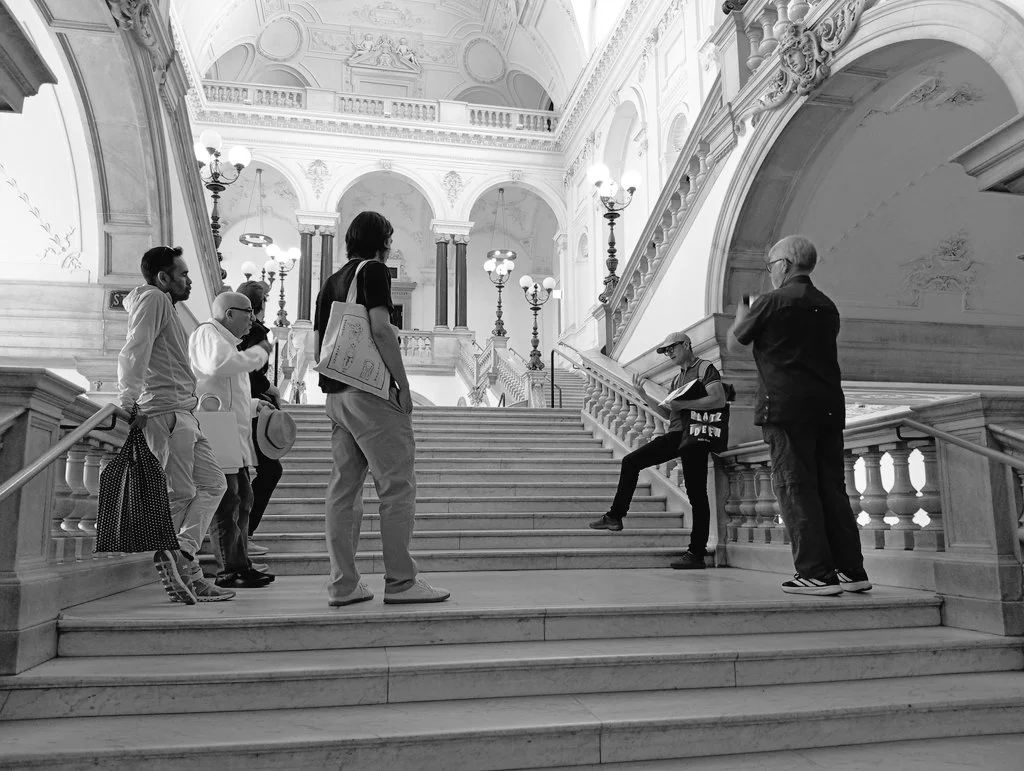
Born and raised in Vienna, Haydn’s enthusiasm for the city was contagious as we walked around some of the intellectual landmarks of the Innere Stadt, learning about the contributions of the likes of Charlotte and Karl Bühler, Lise Meitner, Hans Kelsen, Friedrich Hayek, Sigmund Freud, Karl Popper, and Ernst Mach, among others.
If by any chance you find yourself in Vienna and want to participate in a different kind of tour than the usual sightseeing ones, I highly recommend reaching out to him.
Where Clemens gave us a taste of intellectual Vienna, Eva took us on a viticultural journey from around Austria, tasting a selection of Austrian wines, along with Austrian antipasti, at a cozy wine shop in the heart of the city center.

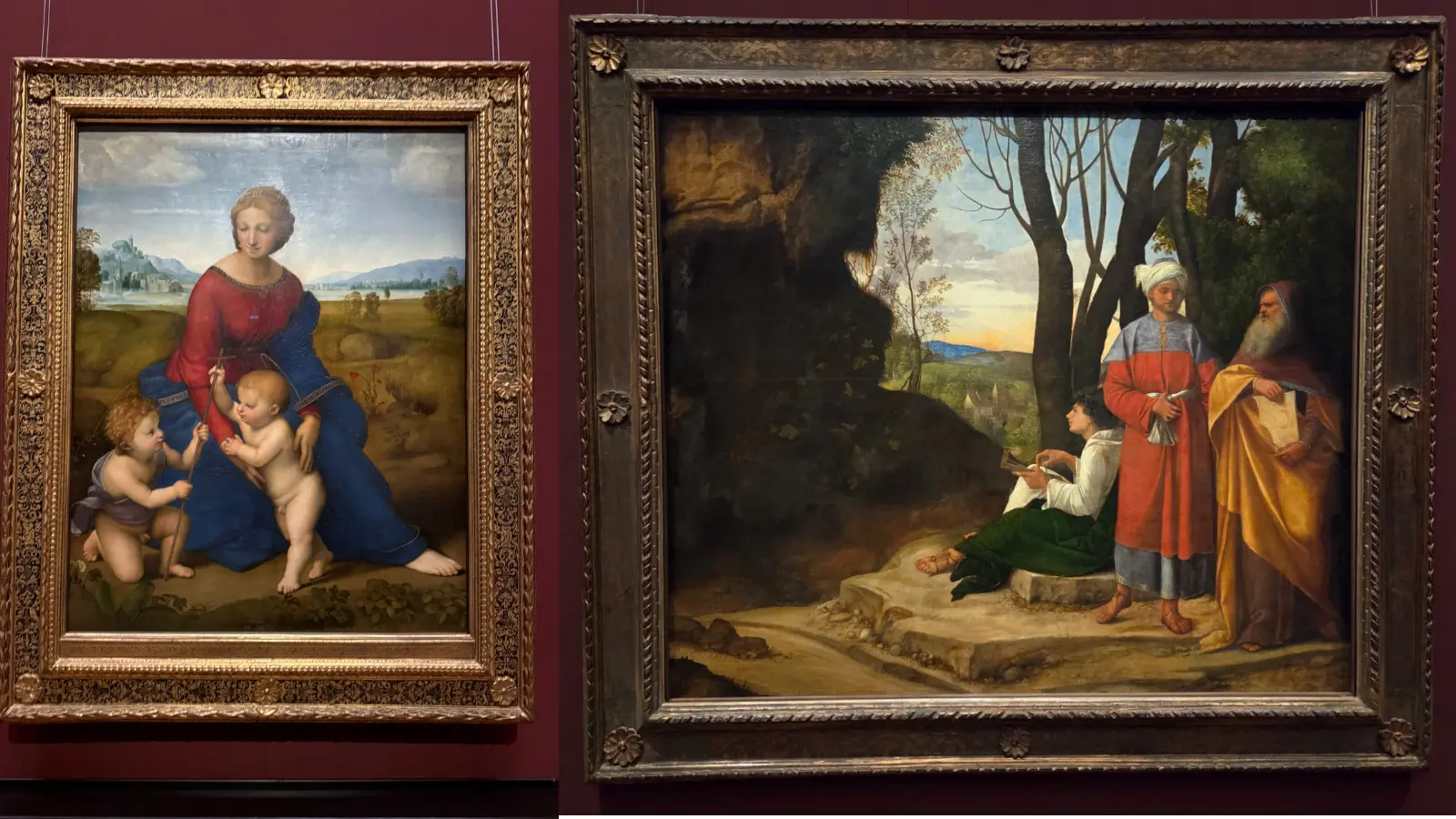
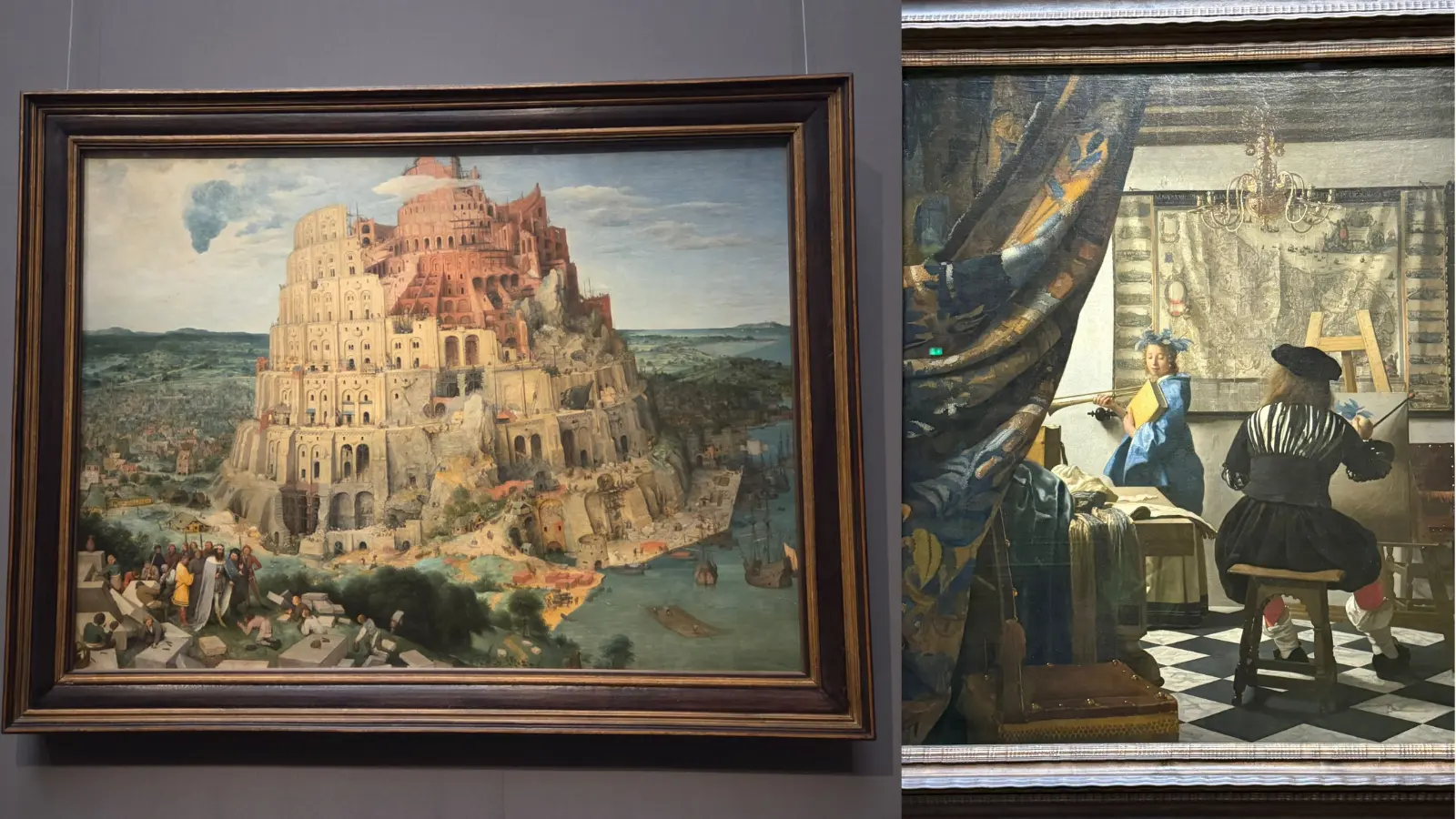
Our artistic outing was at the Kunsthistorisches Museum Wien. There we saw five paintings: The Three Philosophers, Giorgione (c. 1508), Madonna del Prato, Raphael (c. 1506), Tower of Babel, Pieter Bruegel the Elder (c. 1563), Ecce Homo, Titian (1543), and The Art of Painting, Vermeer (c. 1666–68).
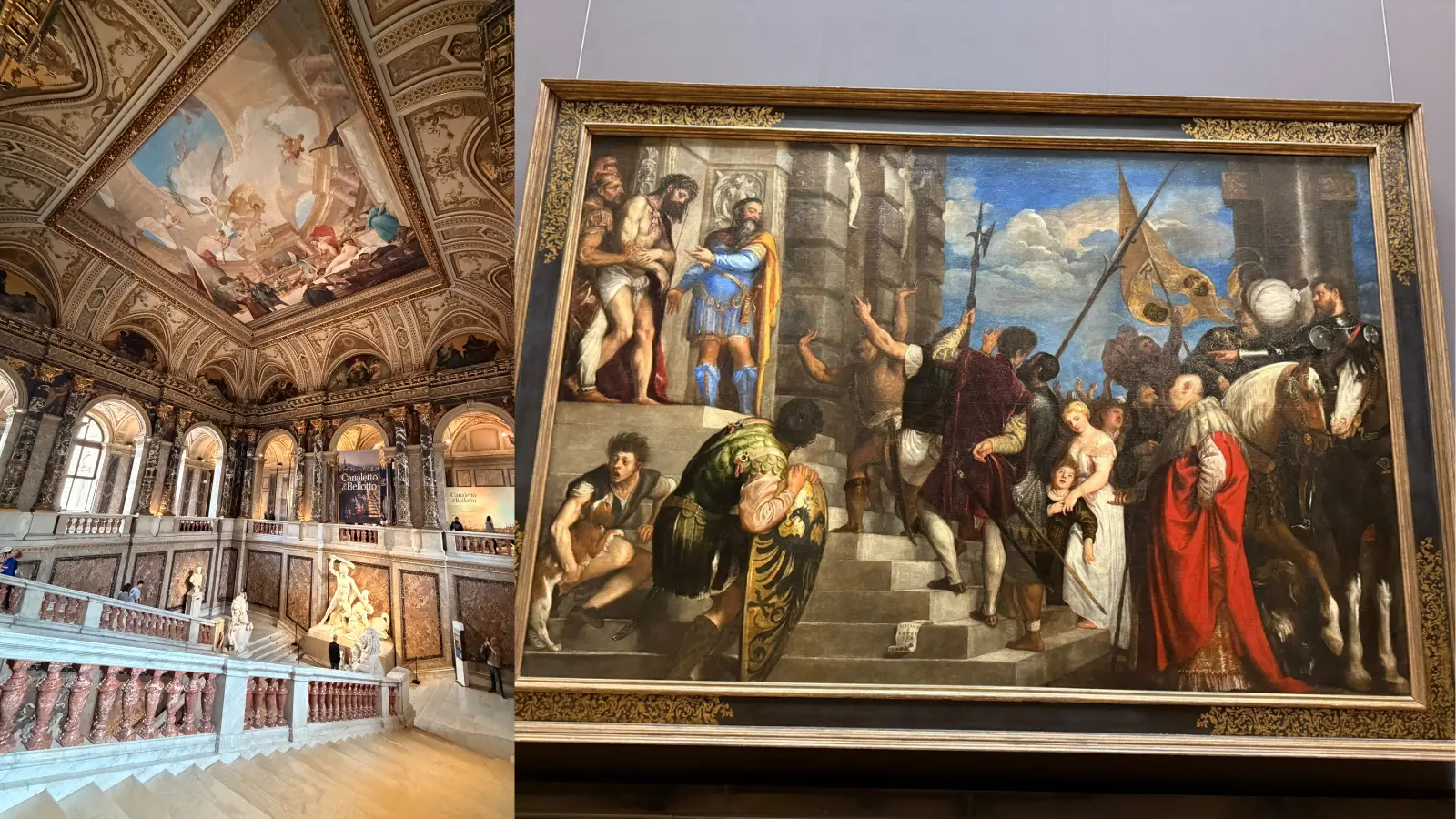
Some of the questions we explored through these works included knowledge transmission across civilizations; what happens when we are overtaken by hubris and it outgrows the understanding of our undertakings; the tension between the individual, institutions, and power; and what art conveys and preserves across time.
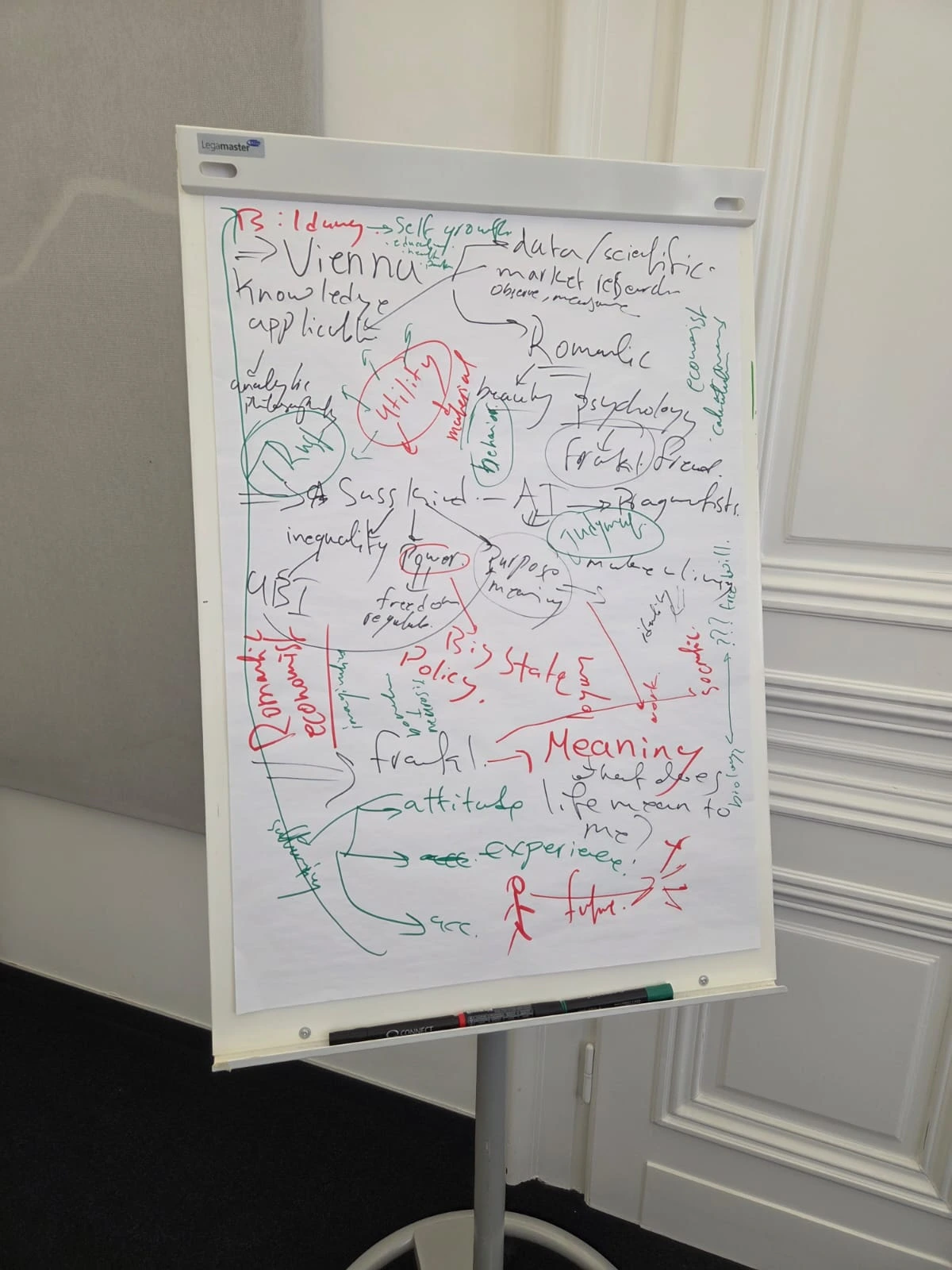
We also had two philosophical sessions: a workshop and a symposium. The workshop focused on three books: Richard Cockett’s Vienna, Daniel Susskind’s A World without Work, and Viktor Frankl’s Man’s Search for Meaning. During the session, we examined the importance of creative imagination, purpose, and meaning in a world disrupted by emerging AI technology.
While the workshop was structured and facilitation-based, the philosophy symposium followed the format of Plato’s dialogue Symposium. Over several rounds of drinks, each participant gave a brief speech about a topic that was agreed on beforehand. In this case, the topic was civic responsibility. The speeches were quite compelling, and led to a subsequent lively and in-depth exchange (although the views were somewhat aligned, and I couldn’t manage to get them to turn the discussion into a heated one, but I can’t complain!).
More Questions Than Answers
These retreats are particularly enjoyable for me because I leave with more questions than answers. Some of the questions that were brought up, and which I will be thinking about in the coming months, include what it means to be responsible and act responsibly; the relationship between consciousness, freedom, democracy and civic responsibility; what utility actually means, and what the relationship between utility, meaning, and purpose is, if there’s any.
Then there’s the question of what it means to be human, and what the new wave of human displacement in the age of AI will look like, especially when we now have large language models that can process and generate language, something that we assumed only humans could do efficiently just a few years ago. I’m also interested in the role of myth making, the creative imagination, art and human creation in general, especially in a post-AI world.
The more I read and discuss these issues, the more I realize that navigating the AI domain from a philosophical perspective is tricky. Of course, some camps might think this endeavor is absolutely useless, and would rather focus all their efforts on just building AI systems. Good for them. I think philosophy serves its purpose well when it engages in such seemingly ‘useless’ questions. That’s because we don’t really have a clear answer, or a consensus, around almost any of these AI-related matters.
Freedom, Power, and AI
Some of the discussions we had during the retreat voiced concerns about the potential dissipation of our freedom and democracy in a world where AI-run states may end up manipulating voters, shaping their interests, and monopolizing control over the systems of production. This would create a wide gap between those who have access to such systems and those who don’t.
At one point I found myself exclaiming that Michel Foucault was right in spending his time dissecting the nature of power, discipline, and identity. He saw power almost as a given force of nature which does not operate in a vacuum, nor strictly through a top-down mechanism alone. Instead, for him, power, discipline, and identity are forged by historical, technological, and cultural forces as well as different power structures that condition us as individuals, our desires, aspirations, and our interactions in society.
Biopolitics, for him, was just another tool of power that manages the conditions of life rather than control the individuals themselves. AI seems to be yet another such tool, one that could end up adding another dimension to this relational network of power dynamics.
I don’t really know what to think about any of this just yet. But it’s not all doom and gloom, and it’s not all upside either. For example, Argentine president Javier Milei is calling for an AI limited liability framework similar to that of the Dutch East India Company, which pioneered the joint stock company model. Only in this case, the argument he is proposing is one where a fully autonomous AI-run company should be able to operate with minimum regulation and limited liability protections.
This would play a major role in allowing AI models and robots to make judgements as economic actors. In the joint stock company model, investors lose what they invested in the company and not their personal wealth. In the case of AI, though, what would that limited liability look like?
The entire legal system is built around the idea of law enforcement and punishment if someone does not obey the law. Joint stock companies or an LLC encourage risk taking that may lead to economic growth at best, and losses at worst, without ruining the investors’ lives. But the investors are still held accountable if they engage in illicit activities. The assumption, then, is that the liability is mainly just an economic one with the main goal of promoting production and growth.
Recognizing AI-run companies as legal entities with limited liability is a trickier matter, because if they make judgements that result in fraud, injury, damages or harm, who would be held accountable?
Another set of such AI-related questions comes from a recent article by Tyler Cowen. I understand the sentiment and where he’s coming from, but the article feels a lot more like AI propaganda.
Cowen’s argument is that the question of AI consciousness is a futile one because we don’t even know what it means for humans to be conscious. This point makes total sense. We have been trying to study this phenomenon for decades without making much progress.
However, Cowen goes on to explain that we sometimes invoke consciousness and intention to suggest that the choices we make as humans are free, when in fact, according to him and a few neuroscience studies he cites, by the time we become conscious of our decision, it has already been decided in parts of our brain.
This merits a separate article to tackle in more depth, but the point Cowen seems to make, or at least that’s what I understood, echoes Milei’s line of reasoning. We are not really free when we’re making choices or judgements; therefore, AI exhibits the same decision-making processes as humans, and so warrants being granted a legal status with limited liability. I’m extrapolating here, yes, but these types of claims cannot just be taken at face value.
At the end of the day, it seems that the narratives pushing for low AI regulation are Foucauldian by nature, unbeknownst to those pushing them.
What Does It Mean to Act Responsibly?
On the other hand, other voices have already started expressing their concerns about our approach to AI as well. The Pope’s latest encyclical is one such example. The Pope calls for a more responsible approach to AI development based on respect for human dignity and highlights the importance of more thoughtful education in the age of AI. I’ll share two excerpts, one on responsibility:
For AI to respect human dignity and truly serve the common good, responsibility must be clearly defined at every stage: from those who design and develop these systems to those who use them and rely on them for concrete decisions. In many cases, however, the internal processes leading to a result remain opaque, making it harder to assign responsibility and correct errors. This is where accountability becomes crucial: the possibility of identifying who must “account” for decisions, justify them, monitor them, and, when necessary, challenge them and remedy any harm caused.
and another on education and Plato:
Educating people about the use of AI, then, involves teaching them to decide when and for what purpose it ought not to be used. The speed and ease with which answers or summaries can be obtained risk extinguishing the desire to ask questions, which is a process that bears fruit only over time. As Plato wrote, the deepest and most important things are learned only after much time and effort, by engaging in discussion with others, “striking upon” ideas and experiences together like flint until the spark of understanding is kindled within us.
Yet again, the more I think about these issues, new aspects become visible, and the more questions I am left with. What is human dignity? Kant seemed to take it for granted. Monotheistic doctrines assume it’s that thing that makes us special since we are created in the image of god, and since we have a soul. Both affirmations are the same, even though they are based on different assumptions: one grounded purely in reason, the other religious.
What does it mean to act responsibly, then? During our retreat symposium, I listened to five interesting yet very different approaches and conceptions of responsibility. Some saw it as an intrinsic motivation to care for our friends, families, business partners and fellow humans; others saw responsibility as a sense of obligation and duty that we have to engage in lest we risk being ostracized by society.
The goal in all these views could be to see others happy, feel good about ourselves, or ensure that society is preserved, with the conditions to sustain itself and keep going, because everyone is being a responsible citizen. Given all that, what would civic responsibility look like in the age of AI?
In the philosophy workshop, as we were sharing our closing remarks, I wondered how useful it was to be asking this type of questions, especially when the AI use case, cost-effectiveness, efficiency, and business model are yet to be determined.
So I turned to a paper clipping one of the participants had brought with him to the workshop, which I had not yet read. The article was titled Should AI steal your job? I opened the second page, skimmed through it, and read the last few paragraphs out loud, which turned out to be a fitting way to close the workshop, and might as well serve as a fitting close to this retreat reflection. I’ll quote the article at length at the end because it’s relevant to the topic at hand.
But before I do so, I want to share the following anecdote. Over lunch after the walking tour, one participant brought up the Foucault comment I had shared during the workshop the day before. Something that was said during the walk had apparently made him remember my Foucault comment, he said. My remark was something like: I hate to be saying this, but it seems that Foucault was right and onto something when he wrote about power, punishment, and biopolitics. And so he suggested Paris as the destination for next year’s retreat. Whether we or not we end up going there, I’m not sure who’s making the choice anymore, and according to Tyler Cowen, it’s already been made, which sounds a bit strange coming from a libertarian like him.
And by way of closing remarks, here’s the promised quote:
In his 1976 book, Weizenbaum wrote about something he called “civil courage”. “Every individual must act as if the whole future of the world, of humanity itself, depends on him. Anything less is a shirking of responsibility and is itself a dehumanizing force, for anything less encourages the individual to look upon himself as a mere actor in a drama written by anonymous agents.”
That might sound a little grandiose for a book that is, at least ostensibly, mostly about computer programming. But as someone who escaped the Holocaust as a boy, Weizenbaum knew that it is a dangerous thing when people begin to see other people as “non-player characters” — and even more dangerous if they begin to see themselves that way.
My sense is that the era of “AI malaise” is coming to an end — at least, everywhere except the place that is supposedly in charge of it. Admittedly, trying to shape the application of technology through human debate, compromise and action can be wearying and effortful. Participating in politics, at the level of the workplace, the community or the nation, can be frequently enraging and unsatisfying. But it is better than watching passively as a handful of people race to make the future, when even they don’t seem to think they can be trusted with it.
— Sarah O’Connor
Join the DecafQuest newsletter
You won't hear me talking about Hegel. But I will tell you to read philosophy.